AI chat assistant for plumbers
Plumbing chats are triage — is it an emergency, what does it roughly cost, can you come today. An assistant that triages well fills your schedule.
Plumbing conversations are really triage: how urgent, roughly what cost, how soon. You do it on the phone all day; the parts that follow a pattern are exactly what an assistant handles — including at 11pm when a burst pipe won't wait for your morning voicemail check.
The configuration that works for plumbing
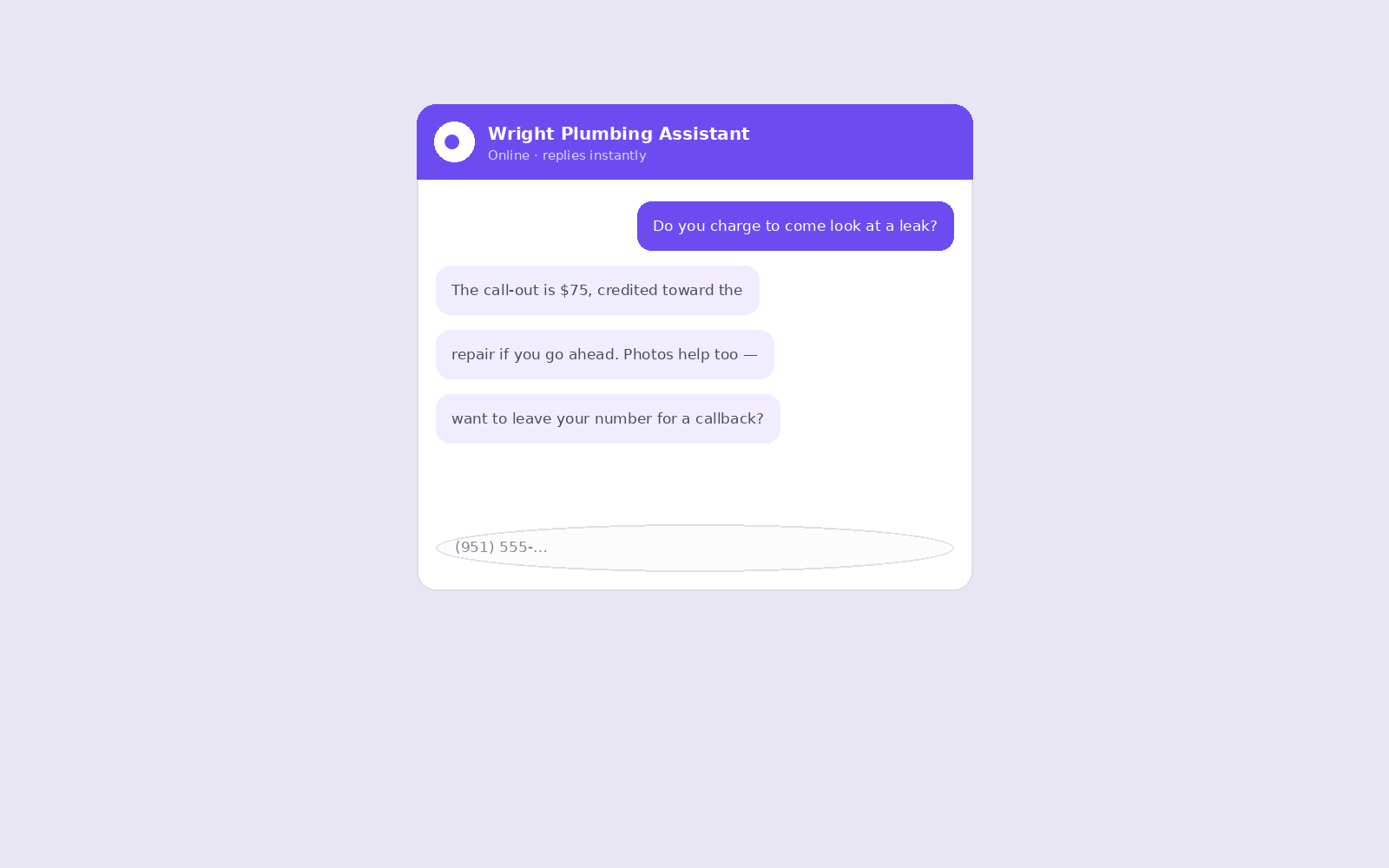
- Answer the call-out fee immediately (Q&A pair): "The call-out is $75, credited toward the repair." It's the first question in nearly every plumbing chat — an assistant that dodges it loses the visitor.
- Triage before booking: teach it your real urgency rules — active leak or no water = same-day; dripping tap or slow drain = scheduled. Your scanned site rarely states these, so they're classic Q&A/text-block material.
- Phone number over email for emergencies: a burst-pipe lead wants a callback, not a newsletter. Collect phone in lead capture, and put a tap-to-call button in your contact channels — plumbing skews heavily mobile.
- Rough ranges beat silence: "Water heater replacement typically runs $1,400–$2,200 installed — exact quote after a look." Ranges keep honest customers in the conversation without committing you.
What to measure after 30 days
After-hours contacts that became jobs, calls saved on the fee question, and how many "scheduled" (non-emergency) bookings appear — that's new business the phone-only setup never scheduled, because nobody calls about a slow drain at work. Most plumbers find the after-hours jobs alone pay for the plan.
Try this on your own assistant
Chaaty is free to start — your assistant is built from your website in about a minute.